The 101 voices shaping how humans and AI work together.De 101 mensen die bepalen hoe mensen en AI samenwerken.
The people most worth following on ways of working, leadership, team and culture in the AI era. Curated for scale-up founders building teams of humans and AI.De mensen die het meest de moeite waard zijn om te volgen over manieren van werken, leiderschap, team en cultuur in het AI-tijdperk. Samengesteld voor scale-up oprichters die teams bouwen van mensen en AI.
TypeType
RegionRegio
The number of the week
47%
manage AI more than they work
Source Boston Consulting Group · AI at Work 2026 Sylvain Duranton (BCG X) · June 3, 2026Bron Boston Consulting Group · AI at Work 2026 Sylvain Duranton (BCG X) · 3 juni 2026
Human & AI WeeklyHuman & AI WeeklyEdition 4Editie 41-6 Junejuni 2026
The week your team became managers of AI.De week dat je team manager werd van AI.
Boston Consulting Group surveyed 11,749 workers in fourteen countries this week. Forty-seven percent of regular AI users now spend more time managing AI than doing the work itself. Same week, Anthropic quietly filed for IPO, the S-1 paperwork, at a $965 billion valuation. That works out to roughly $9.4 million in revenue per employee. Sierra runs at $1.21 million per person. Microsoft renamed AI agents "employees" on stage at Build. Mistral cleared a billion in revenue trajectory on the sovereign-tokens bet. The role that connects all of this, the human who orchestrates a fleet of agents, has no title, no comp band, no playbook. The CEOs who name it this quarter get a head start on the ones who wait for HR to do it.Boston Consulting Group ondervroeg deze week 11.749 mensen in 14 landen. 47% van de mensen die AI regelmatig gebruiken besteedt nu meer tijd aan het managen van AI dan aan het werk zelf. Diezelfde week diende Anthropic stil zijn beursgang-papieren in, de S-1, op een waardering van $965 miljard. Daarbij hoort ongeveer $9,4 miljoen omzet per medewerker. Sierra zit op één-komma-twee-één miljoen per persoon. Microsoft noemt AI-agents "employees" op het Build-podium. Mistral haalt de miljard-omzet op de soevereine-tokens-bet. De rol die dit alles met elkaar verbindt, de mens die een vloot agents aanstuurt, heeft nog geen titel, geen salarisband, geen handboek. De CEO's die deze rol dit kwartaal benoemen, krijgen een jaar voorsprong op de rest.
The four people whose moves this week named a role nobody had a title for.De vier mensen wiens beslissingen deze week een rol benoemden waar nog niemand een titel voor had.
Four moments this week, photographed and named. Each ends with what it actually changes for a scale-up CEO sitting down on Monday.Vier momenten deze week, gefotografeerd en benoemd. Elk eindigt met wat het maandagochtend werkelijk verandert voor een scale-up CEO.
I
Mon Jun 1Org redesignOrg redesign
Anthropic confidentially files its S-1 at a $965B valuation.Anthropic dient vertrouwelijk een S-1 in op een waardering van $965 miljard.
On June 1 Anthropic quietly told the SEC it had filed the paperwork to go public, the S-1. The filing comes after a $65 billion Series H investment round in May, which set the company at a $965 billion valuation after the new money came in. Run-rate revenue sits around $47 billion, up from roughly $10 billion a year earlier. About 5,000 employees on staff. That puts revenue per head near $9.4 million, versus Apple at $2.5 million and Google at $2.1 million. The S-1 itself stays sealed for now. The IPO calendar will still force that comparison into every board pack from Q3 onward.Op 1 juni meldde Anthropic stil aan de SEC dat het de papieren voor een beursgang had ingediend, de S-1. De beursgang volgt op een Series H-investeringsronde van $65 miljard in mei, die het bedrijf op een waardering van $965 miljard zette nadat het nieuwe geld erin zat. De jaaromzet ligt rond $47 miljard, tegenover ongeveer $10 miljard een jaar eerder. Ongeveer 5.000 mensen in dienst. Dat brengt de omzet per medewerker op zo'n $9,4 miljoen, tegenover Apple op $2,5 miljoen en Google op $2,1 miljoen. De S-1 blijft voorlopig verzegeld. De IPO-kalender duwt die vergelijking vanaf Q3 toch in elke board pack.
What this meansKernpuntWhat was a slide in your strategy deck is now a number your board will hold you to. Per-head revenue stops being a "tech-bro-stat" the moment a public-market filing forces investors to use it as the AI-native benchmark.Wat een slide in je strategie-deck was, is nu een getal waar je board je op afrekent. Omzet per medewerker is geen "tech-bro-stat" meer zodra een beursgang het cijfer als AI-native benchmark in de markt zet.
II
Tue Jun 2CapabilityCapability
Microsoft shipped seven models in one keynote, and renamed agents "employees."Microsoft lanceerde zeven modellen in één keynote, en noemde agents "employees".
At Build on June 2, Mustafa Suleyman unveiled seven new in-house models. The flagship is MAI-Thinking-1, a trillion-parameter Mixture-of-Experts design, the kind where only a fraction of the model actually fires for each request. Here that means 35 billion of the trillion parameters are active at any moment, with a context window of 128,000 tokens. The model scores 97% on AIME, the high-school maths-olympiad benchmark, and 53% on SWE Bench Pro, which tests real software-engineering tasks. Suleyman pointed out something the press release glossed over: it was trained from scratch, with no learning copied from another model. He named Anthropic Microsoft's biggest competitor and called Claude "extremely expensive". On the same stage, Satya Nadella wrapped the agentic stack in one line: "agents need identities, permissions and policies just like employees."Op Build 2 juni onthulde Mustafa Suleyman zeven nieuwe eigen modellen. Het vlaggenschip is MAI-Thinking-1, een Mixture-of-Experts model van een biljoen parameters: een type architectuur waarbij maar een klein deel van het model voor elke vraag actief wordt. Hier zijn dat 35 miljard van die biljoen parameters tegelijk, met een contextvenster van 128.000 tokens. Het model scoort 97% op AIME, de wiskunde-olympiade-benchmark, en 53% op SWE Bench Pro, die echte software-engineering taken test. Suleyman wees op iets dat in het persbericht onderbelicht bleef: het model is vanaf nul getraind, zonder kennis over te nemen uit een ander model. Hij noemde Anthropic de belangrijkste concurrent en bestempelde Claude als "extreem duur". Satya Nadella vatte op hetzelfde podium de agentic stack samen in één zin: "agents need identities, permissions and policies just like employees."
The takeawayWat te doenIf your operating system gives accounts to agents the same way it gives accounts to people, the org chart needs new boxes. The L3-to-L4 displacement frontier just moved from a theory in a CRAFT score to a default in your IT stack.Als je besturingssysteem accounts aan agents geeft op dezelfde manier als aan mensen, heeft je organogram nieuwe vakjes nodig. De L3-naar-L4 displacement frontier verschoof deze week van een theorie in een CRAFT-score naar een default in je IT-stack.
47%
III
Wed Jun 3Ways of workingManieren van werken
BCG put a number on the new role: 47% manage AI more than they work.BCG zette een getal op de nieuwe rol: 47% beheert AI meer dan ze werken.
On June 3 Boston Consulting Group released its fourth Global AI at Work survey, 11,749 workers across 14 markets, led by BCG X chief Sylvain Duranton. Seventy-four percent of frontline employees are now regular AI users, up 23 points in a year. Thirty percent have AI agents integrated into their workflow, up from 13 percent. Forty-two percent of regular users save a full workday or more per week. Sixty-seven percent report higher job satisfaction. Forty-one percent report higher cognitive load. BCG names it the Joy Paradox: the work gets better and harder at the same time.Op 3 juni publiceerde Boston Consulting Group zijn vierde Global AI at Work-survey, 11.749 werknemers in 14 markten, geleid door BCG X-baas Sylvain Duranton. 74% van de frontline-medewerkers gebruikt AI regelmatig, 23 punten meer dan een jaar geleden. 30% heeft AI-agents geïntegreerd in de workflow, tegenover 13% vorig jaar. 42% van de regelmatige gebruikers wint een volle werkdag of meer per week. 67% meldt meer werkplezier. 41% meldt hogere cognitive load. BCG noemt het de Joy Paradox: het werk wordt beter en zwaarder tegelijk.
What to doImplicatieRoughly half the people on your team who use AI daily are doing work HR has not named yet. Name it. Define what good looks like. Decide whether managing-AI is part of every role or a role of its own. Without that decision, the 41% who feel the cognitive load have no one to take it to.Ongeveer de helft van je mensen die dagelijks AI gebruiken doet werk dat HR nog niet eens benoemd heeft. Benoem het. Definieer hoe het er goed uitziet. Beslis of AI managen onderdeel van elke rol is of een rol op zich. Zonder die beslissing heeft die 41% met een hoge mentale belasting nergens een gesprek over.
AI psychosis
IV
Thu Jun 4 - Sat Jun 6LeadershipLeiderschap
Two CEOs split publicly: Teradata cuts raises for AI, Box CEO calls that psychosis.Twee CEO's splitsten publiek: Teradata schrapt loonsverhogingen voor AI, Box-CEO noemt dat psychose.
Teradata CEO Steve McMillan told 5,100 employees in an internal memo (Business Insider, June 4) there would be no 2026 salary raises, the typical 2 to 4 percent pool reallocated to AI investment. Same week, Box CEO Aaron Levie kept the dominant counter-frame in the air: "CEOs are uniquely prone to AI psychosis because they're sufficiently distant from the last mile of work that still has to happen to generate most value with AI." Gartner data that circulated the same week: 80% of executives who piloted AI reported workforce reductions regardless of whether the technology generated returns.Teradata-CEO Steve McMillan schreef 5.100 medewerkers in een intern memo (Business Insider, 4 juni) dat er in 2026 geen salarisverhogingen komen, de gebruikelijke 2 tot 4 procent gaat naar AI-investering. Diezelfde week hield Aaron Levie van Box het tegen-frame in de lucht: "CEOs are uniquely prone to AI psychosis because they're sufficiently distant from the last mile of work that still has to happen to generate most value with AI." Gartner-cijfers die rondzongen: 80% van de executives die AI piloteerden meldde een personeelsreductie ongeacht of de technologie rendement opleverde.
The implicationConclusieIf your board pack confuses cost-out with capability-up, you have the disease. The cure starts with the actual people doing the actual work, the last mile Levie names. Have one direct conversation this week with someone two layers below you about what they actually do with AI. Then decide what the budget should fund.Als je board pack cost-out verwart met capability-up, heb je de ziekte. De genezing begint bij de mensen die het werk daadwerkelijk doen, de last mile waar Levie het over heeft. Voer deze week één direct gesprek met iemand twee lagen onder jou over wat ze echt met AI doen. Bepaal daarna wat het budget moet financieren.
The three themes, in depthDe drie thema's, in diepte
Where multiple voices converged this week. The argument behind the headlines.Waar meerdere stemmen samenkwamen deze week. Het argument achter de kop.
47% manage AI more than they work
01.The role appeared · BCG put a number on managing AIDe rol verscheen · BCG zette een cijfer op AI-managen
On June 3, Boston Consulting Group's fourth Global AI at Work survey landed. 11,749 workers across 14 markets, fronted by Sylvain Duranton, BCG X's global lead. The result that travelled: 47% of regular AI users now spend more time managing AI than doing the work itself. 74% of frontline employees are regular users, up 23 points in a year. 30% already have AI agents integrated into their workflow, up from 13%. 42% save a full workday or more per week. 67% report higher job satisfaction. 41% report higher mental load. BCG calls it the Joy Paradox: the work gets better and harder at the same time.Op 3 juni publiceerde Boston Consulting Group zijn vierde Global AI at Work-survey. 11.749 mensen, 14 markten, gepresenteerd door Sylvain Duranton van BCG X. De uitkomst die de hele week doorklonk: 47% van de regelmatige AI-gebruikers besteedt nu meer tijd aan AI managen dan aan het werk zelf. 74% van de mensen in de uitvoering gebruikt AI regelmatig, 23 punten meer dan een jaar geleden. 30% heeft AI-agents al geïntegreerd in de werkflow, was 13%. 42% wint een volle werkdag of meer per week. 67% meldt meer werkplezier. 41% meldt een hogere mentale belasting. BCG noemt het de Joy Paradox: het werk wordt beter en zwaarder tegelijk.
This is what scale-up CEOs are walking into without language for it. The forty-seven percent are not slacking. They are doing real work that does not look like work in the old org chart. The person who used to write the brief now reads three drafts of it, picks the one closest to right, judges where it is thin, sends the agent back twice, then rewrites the opening paragraph by hand. The person who used to write code now writes one diff, reviews ten more, decides which two move forward to production. The judgement-layer is still human. The typing-layer is mostly gone. That is a different job. It needs a different rhythm. Without a name and without rituals around it, the forty-one percent who feel the load have nobody to take it to.Dit is waar scale-up CEO's binnenlopen zonder dat ze er taal voor hebben. Die zevenenveertig procent zit niet te lummelen. Ze doen echt werk dat alleen niet op werk in het oude organogram lijkt. De persoon die vroeger de brief schreef leest nu drie concepten, kiest de versie die het dichtst bij goed komt, ziet waar 'ie dun is, stuurt 'm twee keer terug, en herschrijft daarna de openings-alinea met de hand. De persoon die vroeger code schreef typt nu één diff, reviewt er tien, beslist welke twee naar productie gaan. De oordeel-laag is nog steeds mens. De typ-laag is grotendeels weg. Dat is een andere baan. Het heeft een ander ritme nodig. Zonder een naam en zonder rituelen eromheen heeft die eenenveertig procent met hoge load niemand om mee te praten.
The companies that get ahead this quarter will do three small specific things. They will name the role, in one specific conversation with one specific person on a Tuesday. They will redesign at least one workflow around the messy middle where the AI is good enough to start but not good enough to finish, and the human becomes the judgement-layer rather than the typing-layer. They will stay beside the team while it figures the rest out. Player-coach. Not coordinator. Not the absent one who asks for a quarter-end report. None of this needs a new title in the HR system to begin. It needs one founder who stops calling it AI adoption and starts calling it role design.De bedrijven die dit kwartaal voorop lopen doen drie kleine concrete dingen. Ze benoemen de rol, in één specifiek gesprek met één specifieke persoon op een dinsdag. Ze herontwerpen minstens één workflow rondom het rommelige midden waar de AI goed genoeg is om te beginnen maar niet om af te maken, en de mens wordt de oordeel-laag in plaats van de typ-laag. Ze blijven naast het team staan terwijl het de rest uitvogelt. Player-coach. Geen coördinator. Niet de afwezige die een eind-kwartaal-rapport opvraagt. Niets hiervan vraagt een nieuwe titel in het HR-systeem om te beginnen. Het vraagt één founder die het geen AI-adoptie meer noemt, maar role design.
The same AI does not fit two different people.Dezelfde AI past niet bij twee verschillende mensen.We built emaho around that one fact. Each person gets a small team of agents, shaped by who they are and how far they have come with AI. The Culture Level Scan is the cheapest first step. It takes twelve minutes and shows where your team actually sits today.We bouwden emaho rond dat ene gegeven. Iedere medewerker krijgt een klein team van agents, gevormd door wie ze zijn en hoe ver ze al zijn met AI. De Culture Level Scan is de goedkoopste eerste stap. Het duurt twaalf minuten en laat zien waar je team echt staat.
CEOs have a defining role in shaping how AI delivers value. The true competitive advantage lies with those CEOs who will reshape functions end-to-end.CEO's hebben een bepalende rol in hoe AI waarde levert. Het echte concurrentievoordeel ligt bij de CEO's die functies end-to-end opnieuw vormgeven.
Sylvain Duranton
·
Global Leader, BCG X · AI at Work 2026Global Leader, BCG X · AI at Work 2026
·
bcg.com, June 3 2026
02.The new ratio went public · Anthropic's S-1 forces every board packDe nieuwe ratio werd publiek · Anthropic's S-1 dwingt elke board pack
Look past the headline number and the deeper signal is the ratio. Anthropic does roughly $9.4 million in revenue for each person on staff. Apple does $2.5 million. Google does $2.1 million. Sierra, the agent platform Bret Taylor and Clay Bavor built, runs at $1.21 million per head. Three to four times the per-head number of the most efficient consumer-tech operators in the world. That is only possible because a small group of humans now orchestrates large fleets of agent labour. The headline is the IPO. The story underneath is what those companies decided humans actually do all day.Kijk voorbij het krantenkop-getal en het echte signaal is de ratio. Anthropic draait ongeveer $9,4 miljoen omzet per medewerker. Apple zit op $2,5 miljoen. Google op $2,1 miljoen. Sierra, het agent-platform van Bret Taylor en Clay Bavor, zit op $1,21 miljoen per persoon. Drie tot vier keer het per-medewerker-cijfer van de meest efficiënte consumenten-tech bedrijven ter wereld. Dat kan alleen omdat een kleine groep mensen nu een vloot agent-arbeid aanstuurt. De krantenkop is de beursgang. Het verhaal eronder gaat over wat die bedrijven besloten dat mensen nog daadwerkelijk doen op een dag.
What changes when this becomes a public number. Every board meeting from Q3 onward will pull the comparison. Per-head revenue stops being a "tech-bro stat" and becomes the benchmark investors use to price the AI-native multiple. That has knock-on effects you can already see. Lemkin at SaaStr ran the math the day after filing. Stratechery published two pieces inside seventy-two hours. Sierra's number is now in the same sentence as Anthropic's, which puts a layer for "AI-platform-as-a-team" thinking on the table that did not exist last quarter. The IPO calendar itself becomes a forcing function. By the time the S-1 declassifies, the conversations are already happening.Wat verandert als dit een publiek cijfer wordt. Elke board meeting vanaf Q3 trekt de vergelijking erbij. Omzet per medewerker is geen "tech-bro stat" meer; het wordt de benchmark waarop investeerders het AI-native multiple gaan prijzen. Dat heeft afgeleide effecten die je al ziet. Lemkin van SaaStr maakte het rekensommetje een dag na de indiening. Stratechery publiceerde twee stukken binnen tweeënzeventig uur. Sierra's cijfer staat nu in dezelfde zin als dat van Anthropic, wat een laag voor "AI-platform-als-werkteam"-denken op tafel legt die vorig kwartaal niet bestond. De IPO-kalender zelf wordt een forcing function. Tegen de tijd dat de S-1 openbaar wordt, lopen de gesprekken er allang.
For your next board pack: answer the ratio question on purpose. Where does your per-head revenue sit today? Where would it sit in eighteen months if AI did thirty percent of the work? Which roles need to grow to make that ratio happen, and which need to shrink? That last question is the one most teams avoid. It is also the one a board will ask the moment the Anthropic S-1 goes public. The CEOs who walk in with the answer already drafted will be writing the rules. The ones still figuring it out at the meeting will be following them.Voor je volgende board pack: beantwoord de ratio-vraag bewust. Waar staat je omzet per medewerker vandaag? Waar zou 'ie over achttien maanden staan als AI dertig procent van het werk doet? Welke rollen moeten groeien om die ratio te halen, welke moeten krimpen? Die laatste vraag is degene die de meeste teams vermijden. Het is ook de vraag die een board gaat stellen op het moment dat de Anthropic-S1 openbaar wordt. De CEO's die met het antwoord op zak binnenkomen schrijven de regels. De CEO's die het tijdens de meeting nog uitvogelen volgen ze.
03.Two product theses in one week · craft over chatbot, or OS-layer for agentsTwee product-theses in één week · vakmanschap over chatbot, of OS-laag voor agents
Bloomberg broke June 4 that Brian Chesky is launching his own AI lab, focused on user-interaction and design, while staying CEO of Airbnb. He passed on the OpenAI plug-in path Expedia and Booking took, telling reporters on the record that "the AI startup's tools aren't robust enough." That is an unusual thing for a CEO to put on the record about a competitor's product. For a designer-CEO of an eighty-billion-dollar company, this is the unambiguous play: AI-native products need rich interfaces, not chat boxes. The kind of product you build matters more, not less, as AI scales. Craft becomes the moat. The human side of the interface becomes a competitive advantage the OpenAIs and Anthropics will not solve for you.Bloomberg meldde op 4 juni dat Brian Chesky een eigen AI-lab start dat zich richt op user-interaction en design, terwijl hij CEO van Airbnb blijft. Hij weigerde de OpenAI plug-in route die Expedia en Booking wel namen, en zei tegen verslaggevers dat "de tools van de AI-startup niet robuust genoeg zijn." Een ongebruikelijk publieke uitspraak voor een CEO die normaal zijn productkeuzes intern houdt. Voor een designer-CEO van een tachtig-miljard-bedrijf is dit een onomwonden inzet: AI-native producten hebben een rijke interface nodig, geen chat-vak. Het soort product dat je bouwt telt zwaarder, niet minder, naarmate AI opschaalt. Vakmanschap wordt de moat. De menselijke kant van het oppervlak wordt een concurrentievoordeel dat de OpenAIs en Anthropics niet voor je oplossen.
Same week, on the Build June 2 stage, Satya Nadella wrapped Microsoft's agentic stack (the software layer that lets AI take actions on its own, not just answer questions) with the opposite bet. Foundry, GitHub Copilot, Windows, Agent 365, Microsoft IQ. One line carries the whole thesis: "AI agents need identities, permissions and policies just like employees." The implied product strategy is that the moat is not the interface, and not the craft. The moat is the operating system for agents. The audit trail, the identity model, the permission graph, the policy engine. The product is sold to IT-buyers who care that their agent fleet behaves like a workforce. Both theses will compound. Chesky and Nadella are not arguing. They are pricing two different moats.Diezelfde week, op het Build-podium 2 juni, vatte Satya Nadella Microsofts agentic stack (de softwarelaag waarmee AI zelf acties uitvoert, niet alleen vragen beantwoordt) samen met de tegenovergestelde bet. Foundry, GitHub Copilot, Windows, Agent 365, Microsoft IQ. Eén zin draagt de hele thesis: "AI agents need identities, permissions and policies just like employees." De impliciete productstrategie: de moat is niet de interface, en niet het vakmanschap. De moat is het besturingssysteem voor agents. De audit trail, het identiteitsmodel, de permission graph, de policy engine. Het product wordt verkocht aan IT-buyers die willen dat hun agent-vloot zich als een workforce gedraagt. Beide theses compounden. Chesky en Nadella ruziën niet. Ze prijzen twee verschillende moats.
For your scale-up the question is which room you are optimizing for first. If your product is sold to a human who cares how it feels, Chesky's bet rewards you. If your product is bought by an IT-buyer who cares about audit trails and policy, Nadella's bet rewards you. Most products end up sold to both, in different rooms in the same building. The risk is splitting effort fifty-fifty and being mediocre at both. Pick the room you serve first. Build there with conviction. The other room rewards craft on a delay, never on simultaneity.Voor jouw scale-up is de vraag welke kamer je als eerste bedient. Als je product verkocht wordt aan een mens die geeft om hoe het voelt, beloont de Chesky-bet jou. Als je product gekocht wordt door een IT-buyer die geeft om audit trails en policy, beloont de Nadella-bet jou. De meeste producten worden uiteindelijk aan beide verkocht, in verschillende kamers van hetzelfde gebouw. Het risico zit in de verdeling vijftig-vijftig en daarmee in beide kamers middelmatig zijn. Kies de kamer die je als eerste bedient. Bouw daar met overtuiging. De andere kamer beloont vakmanschap met vertraging, nooit gelijktijdig.
CEOs are uniquely prone to AI psychosis because they're sufficiently distant from the last mile of work that still has to happen to generate most value with AI.CEO's zijn uniek vatbaar voor AI-psychose omdat ze te ver afstaan van het laatste stukje werk dat nog steeds gedaan moet worden om met AI waarde te leveren.
What the Western media missed this week. To put the numbers in context: GPT-4-class API pricing from US frontier labs averages $30 per million tokens in 2026. DeepSeek V4 sits at $0.27 per million. Mistral Medium at €3.50. ERNIE 4.5 open-weight at $0.18. The cost curve is bending faster than the West's narrative is updating, and European scale-ups now have a 100x range to pick from.Wat de Westerse media deze week miste. Om de cijfers in context te zetten: GPT-4-klasse API-prijzen van Amerikaanse frontier-labs gemiddeld $30 per miljoen tokens in 2026. DeepSeek V4 op $0,27 per miljoen. Mistral Medium op €3,50. ERNIE 4.5 open-weight op $0,18. De kostencurve buigt sneller dan het Westerse narratief, en Europese scale-ups hebben nu een range van 100x om uit te kiezen.
Baidu announced ERNIE 4.5 going fully open-weight in early May, priced 30 percent below DeepSeek for managed inference. Baidu's strategic shift from closed competitor to platform play is the largest underreported story of the week.Baidu kondigde begin mei aan dat ERNIE 4.5 volledig open-weight wordt, 30 procent goedkoper geprijsd dan DeepSeek voor managed inference. Baidu's strategische verschuiving van gesloten concurrent naar platform-speler is het grootste onderbelichte verhaal van de week.
DeepSeek's V4-Pro (1.6 trillion parameters, MIT license) saw mass European enterprise pickup throughout May. A Tier-1 EU bank disclosed switching internal RAG (retrieval-augmented generation) pipelines and seeing a 78 percent inference-cost reduction. The cost curve for European deployment is bending faster than most boards realise.DeepSeek's V4-Pro (1,6 biljoen parameters, MIT-licentie) werd in mei massaal opgepikt door Europese ondernemingen. Een Tier-1 EU-bank meldde de overstap van interne RAG (retrieval-augmented generation) pipelines met 78 procent inference-kostenreductie. De kostencurve voor Europese deployment buigt sneller dan de meeste boards beseffen.
Moonshot hinted at K3-Long, an extended-context model targeting agentic workflows. If the spec holds, it is China's most direct response to the collaborator-thesis dropped from the US side this week, betting on context length over latency.Moonshot hintte naar K3-Long, een uitgebreid-context model gericht op agentische workflows. Als de spec klopt, is het China's meest directe antwoord op de collaborator-thesis die deze week uit de VS verscheen, met een bet op context-lengte in plaats van latency.
Lee returned to writing in English on Substack with a piece on "the silicon underground", how Chinese mid-tier enterprise has quietly absorbed Yi-series models into ERP and supply-chain. His point: the Western frontier-lab race frame misses what is happening one layer below the headline.Lee keerde terug naar Engelstalig schrijven op Substack met een stuk over "de silicon underground", hoe Chinese mid-tier ondernemingen Yi-modellen stilletjes hebben opgenomen in ERP en supply-chain. Zijn punt: het Westerse frontier-lab race-frame mist wat er een laag onder de kop gebeurt.
Sakana released a paper on evolutionary AI for scientific discovery, smaller models trained to evolve their own approaches. A different bet entirely from the US/China scale consensus. Worth watching: not all frontier work happens at LLM scale.Sakana publiceerde een paper over evolutionaire AI voor wetenschappelijke ontdekking, kleinere modellen getraind om hun eigen aanpak te laten evolueren. Een totaal andere bet dan de VS/China schaal-consensus. Waard om te volgen: niet al het frontier-werk speelt zich af op LLM-schaal.
Vembu in a long X thread: rural Tamil Nadu engineering teams now ship enterprise SaaS at the same velocity as Bay Area teams. His point: the geography of AI-native software is decoupling from the geography of capital. European founders building distributed teams should pay attention.Vembu in een lange X-thread: rurale Tamil Nadu engineering-teams leveren nu enterprise SaaS tegen dezelfde snelheid als Bay Area-teams. Zijn punt: de geografie van AI-native software ontkoppelt van de geografie van kapitaal. Europese oprichters die gedistribueerde teams bouwen moeten opletten.
Voices & ideas from the 101Stemmen & ideeën van de 101
Quotes from across the week.Citaten van deze week.
The true competitive advantage lies with CEOs who reshape functions end-to-end. AI does not deliver value on its own. Leaders do, by changing what work is for.Het echte concurrentievoordeel ligt bij CEO's die functies van begin tot eind herontwerpen. AI levert geen waarde op zichzelf. Leiders doen dat, door te veranderen waar werk over gaat.
CEOs are uniquely prone to AI psychosis because they are sufficiently distant from the last mile of work that still has to happen to generate most value with AI.CEO's zijn uniek vatbaar voor AI-psychose, omdat ze te ver afstaan van het laatste stukje werk dat nog steeds gedaan moet worden om met AI waarde te leveren.
Most scale-ups have 5 to 10 AI power users. None have AI teams. The action moves from individual productivity to shared norms.De meeste scale-ups hebben 5 tot 10 AI power users. Geen heeft AI-teams. De actie verschuift van individuele productiviteit naar gedeelde normen.
We turn electrons into tokens. The next AI moat is sovereign infrastructure. Europe gets one shot at building that stack before the dependency hardens.Wij maken van elektronen tokens. De volgende AI-moat is soevereine infrastructuur. Europa heeft één kans om die stack te bouwen voor de afhankelijkheid hard wordt.
The median junior analyst now produces work that would have been top-quartile in 2023. Your A-players are competing with everyone else's formerly-B-players.De mediane junior analist produceert nu werk dat in 2023 top-kwartiel was. Je A-spelers concurreren met de voorheen-B-spelers van iedereen.
The AI startup's tools are not robust enough yet. So I am building that layer myself. Craft is the moat. Not the chat box.De tools van de AI-startup zijn nog niet robuust genoeg. Dus bouw ik die laag zelf. Vakmanschap is de moat. Niet het chat-vak.
Zero evidence that AI is killing jobs at any meaningful macro scale. Many firms are hiring AI implementation experts. The macro data does not yet confirm the cost-out playbook.Geen enkel bewijs dat AI banen vernietigt op relevante macro-schaal. Veel bedrijven nemen juist mensen aan voor AI-implementatie. De macrodata bevestigt het cost-out-spelboek nog niet.
Reading the 101 voices is one thing. Building a team that works like they describe is another. The bottleneck is not knowledge. It is shared vocabulary.De 101 stemmen lezen is één ding. Een team bouwen dat werkt zoals zij beschrijven is iets anders. De bottleneck zit niet in kennis. Het is gedeelde taal.
Two voices arguing in public. The choice you face is in the gap between them.Twee stemmen die publiekelijk botsen. De keuze die voor je ligt zit in het gat ertussen.
GS
Goldman Sachs tracker~11,000 net AI jobs lost / month
Goldman Sachs AI Adoption Tracker, June 1. The previous read (two months earlier) was -16,000 a month. The improvement is almost entirely data-center construction (+212,000 jobs since 2022) masking continued white-collar bleed. Gen Z under-30 unemployment correlates with industry AI adoption.Goldman Sachs AI Adoption Tracker, 1 juni. Twee maanden eerder stond de teller op -16.000 per maand. De verbetering komt bijna volledig van datacenter-bouw (+212.000 banen sinds 2022) die het witteboorden-verlies maskeert. Gen Z onder-30 werkloosheid correleert met de AI-adoptie van de sector.
"AI is destroying jobs. Around 11,000 net positions a month, sustained.""AI vernietigt banen. Ongeveer 11.000 netto per maand, structureel."
vs
TS
Torsten SløkApollo · zero evidence
Apollo chief economist, same morning (June 1). Cites the steady weekly ADP through late May. Then on June 6 the BLS print blew past consensus: +172K vs +80K. "Many firms are hiring AI implementation experts," Sløk wrote. His point is not that displacement is absent; it is that the macro data does not yet confirm the cost-out playbook.Apollo hoofdeconoom, dezelfde ochtend (1 juni). Hij verwijst naar de stabiele wekelijkse ADP-cijfers tot eind mei. Op 6 juni klopte het BLS-cijfer de verwachting: +172K versus +80K. "Many firms are hiring AI implementation experts," schreef Sløk. Zijn punt is niet dat displacement afwezig is; het is dat de macro-data het cost-out-spelboek nog niet bevestigen.
"Zero evidence that AI is killing jobs at any meaningful macro scale.""Nul bewijs dat AI banen doodt op enige relevante macro-schaal."
Why this mattersWaarom dit teltBoth readings are technically correct. They live at different scales: Goldman sees the displaced individual; Sløk sees the still-strong aggregate. The CEOs who cut headcount this quarter are placing a bet on Goldman before Sløk's print has even cooled. That is how regret gets built.Beide lezingen kunnen tegelijk kloppen. Ze leven op verschillende schalen: Goldman ziet de verdrongen individu; Sløk ziet het nog steeds sterke geheel. De CEO's die dit kwartaal mensen wegsturen, wedden op Goldman vóór Sløk's cijfer is afgekoeld. Zo bouw je spijt op.
SM
Steve McMillanTeradata · raises = AI
Teradata CEO told 5,100 employees in an internal memo (Business Insider reporting, June 4; carried by Fortune June 6) that 2026 raises will not happen. The typical 2 to 4 percent pool moves to AI investment. McMillan's own 2025 comp was reported above $16M.Teradata-CEO schreef in een intern memo (Business Insider, 4 juni; opgepakt door Fortune 6 juni) aan 5.100 medewerkers dat er in 2026 geen salarisverhogingen komen. De gebruikelijke 2 tot 4 procent gaat naar AI-investering. McMillan's eigen 2025-vergoeding lag boven $16 miljoen.
"We will fund this AI investment by reallocating the budget from 2026 annual salary adjustments.""We financieren deze AI-investering door het budget van de 2026 salarisverhogingen te herverdelen."
vs
AL
Aaron LevieBox · AI psychosis
Box CEO has kept the dominant counter-frame alive all week. The point is not anti-AI; Box ships AI. The point is that the CEOs furthest from real work are most likely to mistake demo magic for delivered value. Gartner data circulating the same week: 80% of executives who piloted AI reported workforce reductions regardless of whether the technology generated returns.Box-CEO hield het tegen-frame de hele week in de lucht. Het punt is niet anti-AI; Box maakt zelf AI-producten. Het punt is dat de CEO's die het verst van het echte werk staan, het meest geneigd zijn demo-magie te verwarren met geleverde waarde. Gartner-data dezelfde week: 80% van AI-piloterende executives meldde personeelsreductie ongeacht of het rendement opleverde.
"CEOs are uniquely prone to AI psychosis because they're sufficiently distant from the last mile of work that still has to happen to generate most value with AI.""CEO's zijn uniek vatbaar voor AI-psychose, omdat ze te ver afstaan van het laatste stukje werk dat nog steeds gedaan moet worden om met AI waarde te leveren."
Why this mattersWaarom dit teltTwo operator CEOs, same week, opposite reads on the same data. McMillan is doing the AI-as-budget-swap move. Levie is naming it as the disease. The test: in twelve months, which of the two still has the team able to ship.Twee operator-CEO's, zelfde week, tegenovergestelde lezingen van hetzelfde gegeven. McMillan doet de AI-als-budget-swap. Levie noemt het de ziekte. De test: over twaalf maanden, welke van de twee heeft nog het team om uit te leveren.
Arthur MenschMistral · sovereign tokens
On CNBC June 3 the Mistral CEO laid out the European bet in plain language: "turning electrons into tokens." He repeated the geopolitical warning that Europe risks becoming a US vassal state within two years if it stays dependent on American frontier AI. Mistral's 2026 trajectory clears $1B in revenue from enterprise plus Le Chat Vibe. The thesis is that the moat is sovereign infrastructure and a stack whose data-residency, language, and rules are written here.Op CNBC 3 juni vatte de Mistral-CEO de Europese bet plat samen: "electronen omzetten in tokens." Hij herhaalde de geopolitieke waarschuwing dat Europa binnen twee jaar een US vassal state riskeert als het afhankelijk blijft van Amerikaans frontier AI. Mistral's 2026-koers haalt meer dan $1 miljard omzet uit enterprise plus Le Chat Vibe. De thesis: de moat is soevereine infrastructuur en een stack waarvan data-residency, taal en regels hier geschreven worden.
"We turn electrons into tokens. The next AI moat is sovereign infrastructure.""Wij maken van electronen tokens. De volgende AI-moat is soevereine infrastructuur."
vs
SN
Satya NadellaMicrosoft · agents = employees
Microsoft CEO on the Build June 2 stage, naming the agentic stack, Foundry, GitHub Copilot, Windows, Agent 365, Microsoft IQ. The framing implies a different bet from Chesky: rich interfaces matter less; what matters is that agents are first-class workers with identities and audit trails in your operating system.Microsoft-CEO op het Build-podium 2 juni, met de agentic stack, Foundry, GitHub Copilot, Windows, Agent 365, Microsoft IQ. De framing impliceert een andere bet dan die van Chesky: rijke interfaces tellen minder; wat telt is dat agents first-class werknemers zijn met identiteiten en audit trails in je besturingssysteem.
"AI agents need identities, permissions, and policies just like employees.""AI-agents hebben identiteiten, permissies en policies nodig, net als medewerkers."
Why this mattersWaarom dit teltTwo infrastructure bets, same week. Mensch says the moat is sovereign electrons-to-tokens, the stack and the language and the data-residency layer. Nadella says the moat is the operating system for agents on top of US hyperscale. For an EU scale-up the choice is no longer about features. It is about whose physics, whose rules, and whose language your daily work lives inside.Twee infrastructuur-bets, zelfde week. Mensch zegt dat de moat soevereine electronen-naar-tokens is, de stack en de taal en de data-residency-laag. Nadella zegt dat de moat het besturingssysteem voor agents op US-hyperscale is. Voor een EU-scale-up is de keuze niet meer over features. Het is over wiens fysica, wiens regels, en wiens taal jouw dagelijkse werk binnen leeft.
TS
The contrarian take of the weekDe contrarian take van de week
Sløk: the macro data still does not confirm the AI-jobs-apocalypse.Sløk: de macrodata bevestigen de AI-banen-apocalyps nog steeds niet.
On the same morning Goldman's tracker reported AI is eating about 11,000 net jobs a month, Apollo chief economist Torsten Sløk published the opposite reading: "zero evidence" that AI is killing jobs at any meaningful macro scale. Sløk's evidence is the weekly ADP series, steady through late May, plus the May payroll print released Friday June 6 that beat consensus by 92,000 (+172K vs. +80K expected). "Many firms are hiring AI implementation experts," he wrote. The point is not that nobody is being displaced. The point is that the macro signal cost-out CEOs have been pricing in has not arrived. The CEOs who already pulled the trigger this quarter are placing a leveraged bet on a chart that has not been drawn yet.Op dezelfde ochtend dat de Goldman-tracker meldde dat AI ongeveer 11.000 banen per maand opslokt, publiceerde Apollo-hoofdeconoom Torsten Sløk de tegenovergestelde lezing: "nul bewijs" dat AI banen doodt op enige relevante macro-schaal. Sløk's bewijs is de wekelijkse ADP-reeks, stabiel tot eind mei, plus het mei-banencijfer dat vrijdag 6 juni verscheen en de verwachting met 92.000 verpletterde (+172K vs. +80K verwacht). "Many firms are hiring AI implementation experts," schreef hij. Het punt is niet dat niemand wordt verdrongen. Het punt is dat het macro-signaal waarop cost-out-CEO's hun beslissingen baseren nog niet is gearriveerd. De CEO's die dit kwartaal de trekker overhaalden, wedden met hefboom op een grafiek die nog niet getekend is.
DebunksOntkracht"AI is already destroying jobs""AI vernietigt nu al banen""Cut now, ask questions later""Snijden nu, vragen later""Macro data confirms the apocalypse""Macro-data bevestigt de apocalyps"
I had this wrongHier had ik het mis
Two weeks ago I wrote that the manager-of-AI role would show up in Q4, after companies had a chance to build the workflows around it. BCG put a real number on it in Q2. The 47% is not a forecast. It is what is already happening, three months ahead of schedule. I underestimated how fast vocabulary catches up to practice when the data shows up first.Twee weken geleden schreef ik dat de rol van AI-manager pas in Q4 zou opduiken, nadat bedrijven de workflows eromheen hadden kunnen bouwen. BCG zette er in Q2 een hard getal op. De 47% is geen prognose. Het is wat al gebeurt, drie maanden vroeger dan ik dacht. Ik onderschatte hoe snel taal de praktijk inhaalt zodra de data eerst zichtbaar wordt.
The model spotted patterns it had seen variations of a million times before, then explained itself in clear sentences. That is not the same as understanding code. The week's real signal is how easy it now is to confuse the two.Het model zag patronen die het al miljoenen keren in trainingsdata was tegengekomen, en legde het uit in heldere zinnen. Dat is nog niet hetzelfde als code begrijpen. Het echte signaal van deze week is hoe makkelijk je die twee dingen nu door elkaar haalt.
Yann LeCun · Executive Chair, AMI Labs · X post, May 28 2026
The hidden trend of the weekDe verborgen trend van de week
The agent commerce stack shipped this week.De agent-commerce stack kwam deze week uit.
1
DiscoveryDiscovery
ChatGPT became the shopping search engine.ChatGPT werd de shopping-zoekmachine.
Shopify and Salesforce both shipped ChatGPT integrations this month so the products they manage are discoverable inside the chat interface. Klarna released its own AI search app inside ChatGPT for shopping. The question for a B2B brand is not whether to be discoverable by agents: it is whether your competitor will be discoverable first.Shopify en Salesforce leverden deze maand allebei ChatGPT-integraties zodat de producten die ze beheren vindbaar zijn binnen de chat-interface. Klarna lanceerde zijn eigen AI-search app binnen ChatGPT voor shopping. De vraag voor een B2B-merk is niet of je vindbaar moet zijn voor agents: het is of je concurrent eerder vindbaar wordt.
2
Payment + creditBetaling + krediet
Klarna BNPL (buy-now-pay-later) is now live inside Stripe's agent checkout.Klarna BNPL (achteraf-betalen in termijnen) is nu live binnen Stripe's agent-checkout.
Klarna and Stripe announced that flexible payment options now work inside Shared Payment Tokens, the technical handshake that lets an AI agent pay on behalf of a person. Before this week, AI shopping agents could only use card-on-file. Now agents can offer BNPL and instalments without breaking. Alt-payment is no longer frozen out of agent flows. Klarna IR, May 25.Klarna en Stripe kondigden aan dat flexibele betaalopties nu werken binnen Shared Payment Tokens, de technische handshake waarmee een AI-agent namens een mens kan betalen. Voor deze week konden AI-shoppingagents alleen card-on-file gebruiken. Nu kunnen agents BNPL en termijnen aanbieden zonder te breken. Alt-payment is niet meer buitengesloten van agent-flows. Klarna IR, 25 mei.
3
The shiftDe omslag
B2B SaaS UI has a delivery date now.B2B SaaS UI heeft nu een einddatum.
Bret Taylor said on May 4 that "the era of clicking buttons is over." Twenty days later the four layers needed to make that real: discovery, storefront, payment, credit: all shipped from different vendors and started working together. Plan for Q4 2026 as the moment when an agent stack becomes the default purchase path inside enterprise procurement. The UI dies on a schedule, not in a tweet.Bret Taylor zei op 4 mei dat "het tijdperk van knoppen aanklikken voorbij is". Twintig dagen later kwamen de vier lagen die dat echt maken: discovery, storefront, payment, krediet: vanuit verschillende vendors uit en begonnen samen te werken. Plan Q4 2026 als het moment waarop een agent-stack de default aankooppad wordt binnen enterprise-inkoop. De UI sterft op schema, niet in een tweet.
The practical move for founders. Map your top three customer-journey friction points to the four layers above. Pick one where an agent path could close a real gap in the next 90 days. The companies that experiment now will not be the ones that catch up in 2027.De praktische beweging voor founders. Map je top drie customer-journey friction-punten op de vier lagen hierboven. Pak er een waar een agent-pad een echt gat kan dichten in de komende 90 dagen. De bedrijven die nu experimenteren zijn niet die in 2027 inhalen.
The week in languageDe week in taal
Click any term to copy it. Hover to read what it means and where it surfaced. These are the words the 101 are putting into circulation this week.Klik op een term om hem te kopiëren. Hover om te lezen wat hij betekent en waar hij opdook. Dit zijn de woorden die de 101 deze week in circulatie brengen.
Themes · last 4 weeksThema's · laatste 4 weken
Ways-of-working climbed steadily for 4 weeks; org redesign doubled. Culture-talk plateaued. The conversation moved from tools to structure.Ways-of-working klom 4 weken gestaag; org-redesign verdubbelde. Culture-talk plateaude. Het gesprek verschoof van tools naar structuur.
Featured voice profileFeatured stem profiel
Arthur Mensch
CEO, Mistral · sovereign tokens
Co-founded Mistral in 2023 in Paris. Built a frontier lab without a US headquarters, without US capital majority, and without going through the OpenAI-as-default playbook. This year Mistral cleared the billion-dollar revenue mark and the Le Chat Vibe consumer product. For two years he has said the same thing in interviews: Europe gets one shot at building the sovereign AI stack before the dependency hardens.Mede-oprichter van Mistral in 2023 in Parijs. Bouwde een frontier lab zonder US-hoofdkantoor, zonder US-kapitaalmeerderheid, en zonder via het OpenAI-as-default-spelboek te gaan. Dit jaar passeerde Mistral de miljard-omzet en kwam Le Chat Vibe als consumentenproduct uit. Zijn publieke boodschap is twee jaar consistent: Europa krijgt één kans om de soevereine AI-stack te bouwen voordat we erin vastlopen.
"Turning electrons into tokens""Electronen omzetten in tokens"
Framed Mistral's business in one phrase. Reiterated that Europe risks becoming a "US vassal state within two years on AI" if it stays dependent. Mistral on track for $1B 2026 revenue.Vatte Mistral in één zin. Herhaalde dat Europa binnen twee jaar een "US vassal state" wordt op AI als de afhankelijkheid blijft. Mistral koerst op meer dan $1 miljard omzet in 2026.
May · Le Chat Vibe rollout
Consumer-grade product on a sovereign stackConsumenten-product op een soevereine stack
Le Chat Vibe ships to French consumers on Mistral models trained in EU data centres. The first credible "AI-native consumer app that is not built on US frontier labs" gets a calendar date.Le Chat Vibe gaat naar Franse consumenten op Mistral-modellen getraind in EU-datacenters. De eerste geloofwaardige "AI-native consumenten-app die niet op US frontier labs draait" krijgt een datum.
Feb · Paris AI Summit
"Europe gets one shot at this""Europa heeft één kans hierop"
Made the case publicly at the Macron-hosted summit that European AI sovereignty stops being a slogan once Mistral, SAP/Prior Labs and ASML pull together. The argument helped reshape the EU AI Act simplification work.Stelde publiekelijk op de door Macron geleide top dat Europese AI-soevereiniteit ophoudt een slogan te zijn zodra Mistral, SAP/Prior Labs en ASML samentrekken. Het argument hielp het vereenvoudigingswerk van de EU AI Act vorm te geven.
May 3 · Interview
"The org chart from 2022 will hurt you in 2027""Het 2022-organogram gaat je pijn doen in 2027"
Redesign now while you can do it slowly. Wait, and you do it under pressure.Herontwerp nu, terwijl je het rustig kunt. Wacht en je doet het onder druk.
3 candidates for the next version of the 1013 kandidaten voor de volgende 101
Three voices that surfaced this week. They shaped the W23 conversation enough to be watched for the next list update.Drie stemmen die deze week opvielen. Ze hebben het W23-gesprek genoeg gevormd om mee te nemen voor de volgende lijst-update.
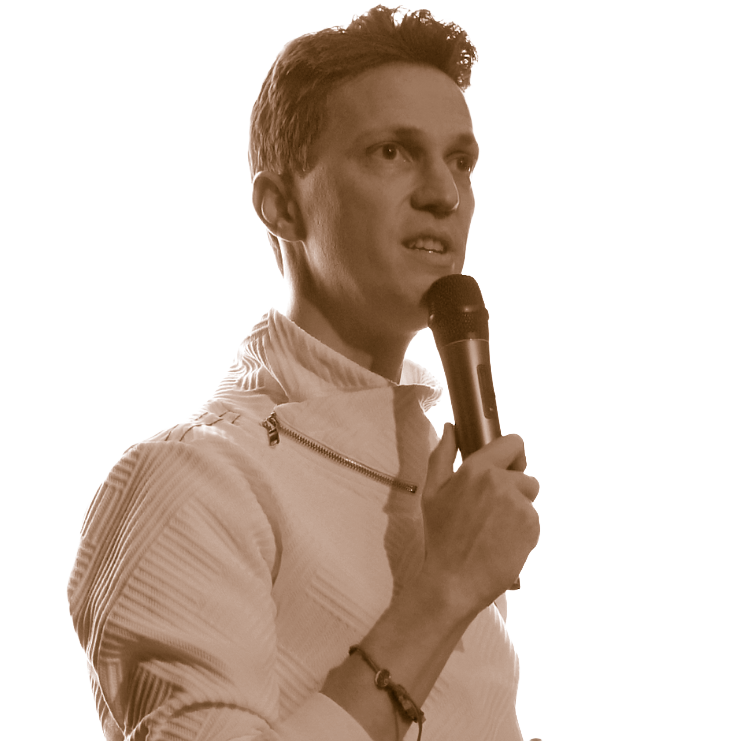
Fronted the BCG AI at Work 2026 study on Jun 3. 11,749 workers, 14 markets. Authored the framing scale-up CEOs and CHROs cited all week: 47% of regular AI users now manage AI more than they work.Presenteerde op 3 juni de BCG AI at Work 2026-studie. 11.749 werknemers, 14 markten. Auteur van het frame dat scale-up CEO's en CHRO's deze hele week aanhaalden: 47% van de regelmatige AI-gebruikers managet AI nu meer dan zij werken.
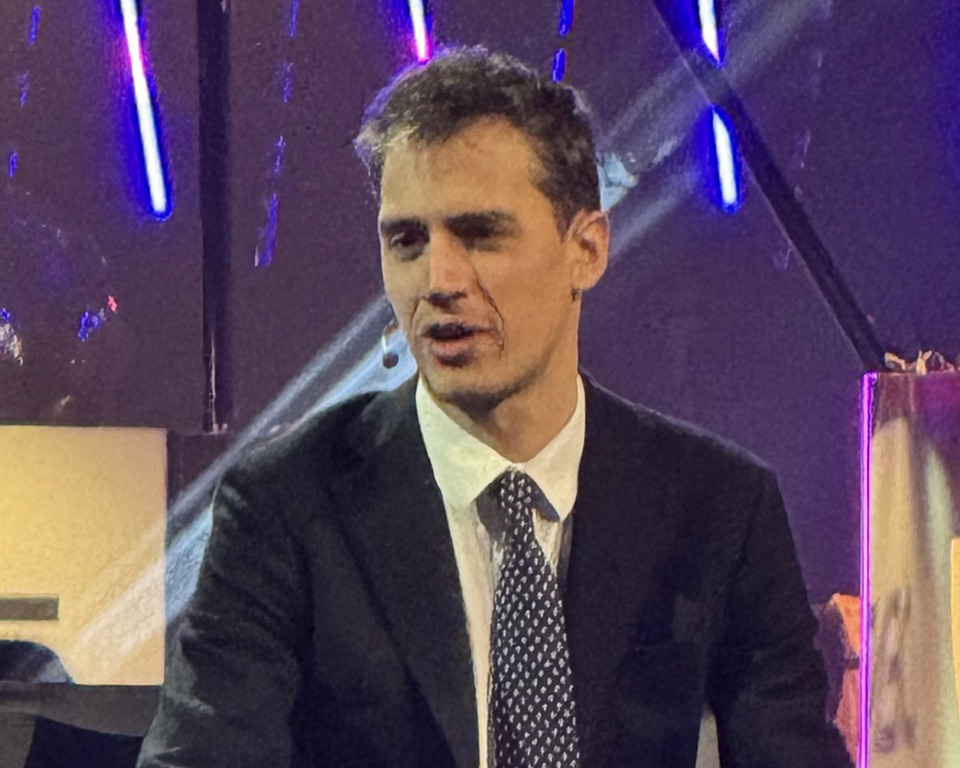
Published the sharpest macro counter-frame of W23 on Jun 1: zero evidence AI is killing jobs at any meaningful scale. The May payroll print on Jun 6 beat consensus by 92,000 and proved his point in real time.Publiceerde op 1 juni het scherpste macro-tegen-frame van W23: nul bewijs dat AI banen vernietigt op enige relevante schaal. Het mei-banencijfer van 6 juni klopte de verwachting met 92.000 en bevestigde zijn punt direct.
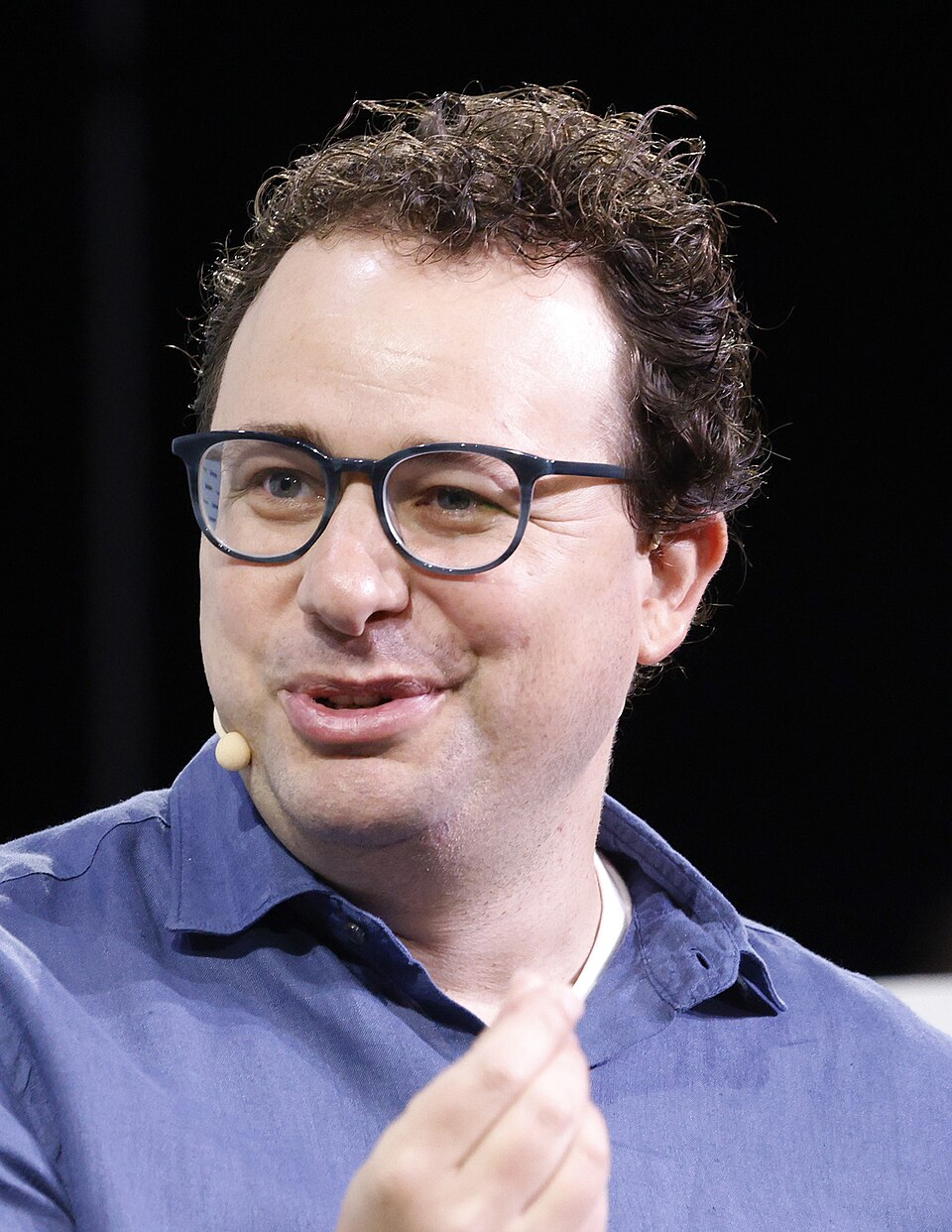
Wrote the internal memo of the week: 5,100 employees, no 2026 salary raises, the entire 2-to-4% pool reallocated to AI investment. The week's most-discussed counter-example to the BCG framing. The antagonist case that scale-up CEOs will compare themselves to next quarter.Schreef het interne memo van de week: 5.100 medewerkers, geen salarisverhogingen in 2026, de hele 2 tot 4% pool gaat naar AI-investering. Het meest besproken tegenvoorbeeld op het BCG-frame deze week. De antagonist-case waar scale-up CEO's zich volgend kwartaal mee gaan vergelijken.
Five cases this week where what was said before met what is true now. The pattern matters more than any single case.Vijf gevallen deze week waarin wat eerder werd gezegd, de toets met de werkelijkheid van nu doorstond. Het patroon telt zwaarder dan elk afzonderlijk geval.
Then, March 2026
"OpenAI at $852B is the AI valuation ceiling for this cycle.""OpenAI op $852B is het AI-waardering plafond voor deze cyclus."
Operator consensus, multiple AI analyst notes
Wrong
Now, May 26 2026
Anthropic closed at $900B+ pre-money. Safety-first compounded faster than velocity-first. The ceiling moved up before anyone agreed where it was.Anthropic sloot af bij $900B+ pre-money. Safety-first groeide sneller dan velocity-first. Het plafond bewoog omhoog voordat iemand het eens was waar het stond.
"Karpathy joined Anthropic to use Claude to build the next Claude.""Karpathy ging naar Anthropic om met Claude de volgende Claude te bouwen."
Human + AI Weekly, Edition 2
Confirmed in 7 days
Now, May 26 2026
Mythos found 10,000+ zero-days across 40 partner orgs. Recursive R&D is now operational, not theoretical. The thesis we wrote about last week shipped seven days later.Mythos vond 10.000+ zero-days bij 40 partner-orgs. Recursive R&D is nu operationeel, niet theoretisch. De thesis die we vorige week schreven kwam zeven dagen later uit.
"Zero new engineering hires in FY26. AI absorbs the team.""Geen nieuwe engineering hires in FY26. AI absorbeert het team."
Marc Benioff, Salesforce
Reversed
Now, Apr 28
"AI will not kill entry-level. We are hiring 1,000 new grads to prove it.""AI zal instapfuncties niet doden. We nemen 1.000 grads aan om dat te bewijzen."
"AI agent does the work of 850 customer-service agents.""AI-agent doet het werk van 850 customer-service medewerkers."
Sebastian Siemiatkowski, Klarna
Adjusted
Now, 2026
"We adjusted. Human-quality support matters more than the headcount story.""We hebben bijgesteld. Kwaliteit van menselijke ondersteuning telt meer dan het headcount-verhaal."
"Mistral hits $300M annual recurring revenue (ARR) by mid-2026, secures European sovereignty contracts.""Mistral haalt $300M annual recurring revenue (ARR) voor midden 2026, sluit Europese soevereiniteitscontracten."
Arthur Mensch, Sifted interview
Beat
Actual, May 2026
$400M ARR disclosed, ASML invested €1.3B, $1.4B Sweden data center.$400M ARR bekendgemaakt, ASML investeerde €1,3B, $1,4B Zweden datacenter.
Klarna recalibration, Salesforce reversal, Chesky framing all converge on "workforce."Klarna-bijstelling, Salesforce-omkering, Chesky-framing convergeren allemaal op "workforce".
The frame · AI Culture LevelsHet kader · AI Culture Levels
Where does your team sit on the curve right now? Each stage asks for a different leadership skill. Most Dutch scale-ups land at Blueprint and stall, because Engine asks for a redesign nobody has shown them yet.Waar staat jouw team nu op de curve? Elke fase vraagt iets anders van je leiderschap. De meeste Nederlandse scale-ups komen tot Blueprint en blijven daar steken, omdat Engine een herontwerp vraagt dat niemand ze nog heeft laten zien.
todayvandaag+1 year+1 jaar+3 years+3 jaar+5 years+5 jaar
Teams do not jump to Engine. They walk. Watch the dot move and notice: every stage is a different leadership choice. The curve gets steeper because each next stage takes less time, once the foundations from the previous stage are in place.Teams springen niet naar Engine. Ze lopen er naartoe. Zie de stip bewegen en let op: elke fase is een ander soort leiderschapskeuze. De curve wordt steiler omdat elke volgende fase minder tijd kost, zodra het fundament van de vorige fase staat.
Curator's lensCurator's lens
Half your AI users are doing a job that has no name. Name it.De helft van je AI-gebruikers doet werk zonder naam. Benoem het.
I have been coaching scale-up CEOs through these moments for over a decade. The same conversation lands on every agenda now, but this week it had clearer shape. Boston Consulting Group surveyed eleven thousand people and reported that 47% of regular AI users now spend more time managing AI than doing the work itself. The work has not disappeared. It has moved. The person on your team who used to write the brief now reads three versions of it, picks one, judges where it is weak, sends the agent back twice, then rewrites the opening paragraph. That is a different job. It needs a different rhythm. Most companies have not named it yet.Ik begeleid scale-up CEO's al ruim tien jaar door dit soort momenten. Hetzelfde gesprek komt nu op elke agenda terug, maar deze week kreeg het een scherpere vorm. Boston Consulting Group ondervroeg elfduizend mensen en meldde dat 47% van de regelmatige AI-gebruikers nu meer tijd besteedt aan het managen van AI dan aan het werk zelf. Het werk is niet weg. Het is verschoven. De persoon op jouw team die vroeger de brief schreef leest nu drie versies ervan, kiest er één, ziet waar 'ie dun is, stuurt 'm twee keer terug, en herschrijft daarna de openings-alinea. Dat is een andere baan. Het heeft een ander ritme nodig. De meeste bedrijven hebben er nog geen naam aan gegeven.
The companies I see thrive right now did three small specific things. First, the founder named the role. Not in a strategy deck. In one Tuesday-morning conversation with one specific person. Something close to "You are the manager of our research agent now. Let us figure out together what that means." Second, they redesigned at least one workflow around the messy middle, where the AI is good enough to start but not good enough to finish. The human became the judgment-layer, not the typing-layer. Third, the leader stayed beside them while they figured it out. Player-coach. Not coordinator. Not the absent one who asks for a report next quarter.De bedrijven die ik nu zie bloeien deden drie kleine concrete dingen. Eén: de founder benoemde de rol. Niet in een strategie-deck. In één dinsdagochtend-gesprek met één specifiek iemand. Iets als "Jij bent vanaf nu de manager van ons research-agent. Laten we samen uitvogelen wat dat betekent." Twee: ze hebben minstens één workflow opnieuw ingericht rondom het rommelige midden, waar de AI goed genoeg is om te beginnen maar niet om af te maken. De mens werd daar de oordeel-laag, niet de typ-laag. Drie: de leider stond ernaast terwijl ze het uitvogelden. Player-coach. Geen coördinator. Geen afwezige die volgend kwartaal een rapport opvraagt.
Aaron Levie called the other thing AI psychosis this week. The cure I keep seeing is simple and uncomfortable. Spend a Monday morning with someone two layers below you, on the work they actually do with AI. Not the work in the deck. The work. You will learn more in two hours than in two months of dashboards.Aaron Levie noemde het andere ding deze week AI psychosis. De genezing die ik blijf zien is simpel en ongemakkelijk. Breng een maandagochtend door met iemand twee lagen onder jou, op het werk dat ze echt met AI doen. Niet het werk in de slides. Het echte werk. Je leert in twee uur meer dan in twee maanden dashboards.
Want to see what this looks like for one of your people?Wil je zien hoe dit eruitziet voor één van jouw mensen?We can stand up a personal agent-team in 24 hours. It rests on twelve years of personality work, applied to who the person is and where they sit on AI today. Recalibrated every six months. One person, one Operating Profile, one team of agents that actually does what that person needs done.We zetten in 24 uur een persoonlijk agent-team op. Het bouwt op twaalf jaar persoonlijkheidswerk, toegepast op wie iemand is en waar 'ie nu staat met AI. Elke zes maanden hermeten. Eén persoon, één Operating Profile, één team van agents dat doet wat die persoon nodig heeft.
What founders and CHROs should actually do this weekWat founders en CHRO's deze week concreet zouden moeten doen
Concrete actions for the founder seat plus prompts for the CHRO seat. Drawn from this week's signals.Concrete acties voor de founder-stoel plus vragen voor de CHRO-stoel. Geput uit de signalen van deze week.
ActionsActies
Pick one routine technical task your team still does by hand. Hand it to AI this week. Use the time you free up to have one extra conversation with a customer who matters.Kies één technische routinetaak die je team nu nog met de hand doet. Geef het deze week aan AI. Gebruik de tijd die je vrijspeelt voor één extra gesprek met een klant die ertoe doet.
Take the AI Culture Levels test with your leadership team. Pick the next stage together. Decide which two things you will change in the next 90 days to get there.Doe samen met je leiderschapsteam de AI Culture Levels test. Kies samen het volgende niveau. Bepaal welke twee dingen je in de komende 90 dagen verandert om er te komen.
Write down one role in your company that you would redesign first if you knew AI would take a third of its tasks within a year. Start the redesign conversation with the person doing that role.Schrijf één rol in je bedrijf op die je als eerste zou herontwerpen als je wist dat AI er binnen een jaar een derde van overneemt. Begin het herontwerp-gesprek met de persoon die de rol vervult.
If you build B2B SaaS: open your roadmap and find the three features that an agent will mediate first. Plan how your sales and customer success roles change when the agent is in the room.Bouw je B2B SaaS: open je roadmap en zoek de drie features waar een agent als eerste tussen gaat zitten. Bedenk hoe je sales- en customer-success rollen veranderen zodra de agent meedoet.
Send this edition to one founder you respect. Ask which of the four moments above lands hardest in their company. The conversation is the work.Stuur deze editie naar één founder die je waardeert. Vraag welk van de vier momenten hierboven het hardst landt in zijn bedrijf. Het gesprek is het werk.
Coach promptsCoachvragen
If half our team is already managing AI more than doing the work (per BCG this week), what is the official name of that role at our company, and who holds it?Als de helft van ons team nu al meer AI beheert dan zelf werkt (BCG deze week), wat is de officiële naam van die rol bij ons, en wie vervult 'm?
Where in our company do people still feel like they are doing meaningful work? What is making that feeling possible, and what would break it?Op welke plek in ons bedrijf hebben mensen nog het gevoel dat ze betekenisvol werk doen? Wat maakt dat gevoel mogelijk, en wat zou het kunnen breken?
Are we a company that explains what it tries with AI: what worked, what failed, what we learned? Or a company that hides those choices behind a strategy slide?Zijn wij een bedrijf dat uitlegt wat het probeert met AI: wat werkte, wat misging, wat we leerden? Of een bedrijf dat die keuzes verstopt achter een strategie-slide?
If we had to choose tomorrow between US-based AI and a sovereign European stack, which one would feel like home for our team, and why?Als we morgen moesten kiezen tussen Amerikaanse AI en een soevereine Europese stack, welke voelt thuis voor ons team, en waarom?
When AI agents start meeting our customers first, who in our company keeps the relationship human, and how do we make sure that role is the most respected one we hire for?Als AI-agents straks als eerste onze klanten ontmoeten, wie houdt in ons bedrijf de relatie menselijk, en hoe zorgen we dat die rol de meest gerespecteerde is waarvoor we werven?
Next Saturday · June 13, 2026Volgende zaterdag · 13 juni 2026
Coming next week · three signals to watchKomende week · drie signalen om op te letten
The first scale-up CEO to name the role. BCG put a number on "manager of AI" this week (47% of regular users) but the vocabulary is still loose. Whoever titles the role publicly next, in a job posting or an annual letter, shapes the language other CEOs end up borrowing. The fastest framers usually win the talent narrative for two quarters.De eerste scale-up CEO die de rol benoemt. BCG zette deze week een cijfer op de "manager van AI" (47% van regelmatige gebruikers) maar de woordkeuze is nog los. Wie de rol als eerste publiek benoemt, in een vacature of jaarbrief, vormt de taal die andere CEO's overnemen. De snelste framer wint twee kwartalen lang het talent-verhaal.
How the Anthropic S-1 disclosures leak. The filing is confidential. The first partial revelations of revenue mix, customer concentration, or training-cost lines will appear inside a week. Whoever leaks them first signals how the IPO calendar will reshape the conversation around per-head revenue and the AI-native multiple.Hoe de Anthropic-S1-onthullingen lekken. De filing is vertrouwelijk. De eerste deel-onthullingen over omzetmix, klantconcentratie of trainingskosten-regels komen binnen een week. Wie ze als eerste laat lekken signaleert hoe de IPO-kalender het gesprek over omzet-per-medewerker en het AI-native multiple gaat hervormen.
The EU response to MAI-Thinking-1. Microsoft just named Anthropic its biggest competitor on European enterprise AI. With the EU AI Act fully applying August 2 and the Digital Omnibus still being negotiated, the EU AI Office's framing of "competitive landscape" matters this week. Watch for the first signal from Brussels on how the regulator views a Microsoft-built sovereign-adjacent stack.Het EU-antwoord op MAI-Thinking-1. Microsoft noemde Anthropic deze week zijn belangrijkste concurrent in Europese enterprise AI. Met de EU AI Act die op 2 augustus volledig geldt en de Digital Omnibus nog in onderhandeling, doet de framing van "competitive landscape" door het EU AI Office er deze week toe. Let op het eerste signaal uit Brussel over hoe de toezichthouder een Microsoft-gebouwde semi-soevereine stack ziet.
Showing 101 of 101 voicesToont 101 van 101 stemmen
FOUNDER · emahoFOUNDER · emaho
No one should get the same AI.Niemand zou dezelfde AI moeten krijgen.
Paul Musters founded emaho in Rotterdam. The first generation of AI gave every person in your company the same chat window. The second generation, the one he is building, is personal. emaho is the first software that makes AI personal: a small team of AI-agents per employee, calibrated to their personality type and to where they actually sit on their own AI level. No two Operating Profiles are the same. One AI for everyone works for no one.Paul Musters richtte emaho op in Rotterdam. De eerste generatie AI gaf iedereen in je bedrijf hetzelfde chatvenster. De tweede generatie, die hij nu bouwt, is persoonlijk. emaho is de eerste software die AI persoonlijk maakt: een klein team van AI-agents per medewerker, afgestemd op hun persoonstype en op waar ze écht staan op hun eigen AI-niveau. Geen twee Operating Profiles zijn hetzelfde. Eén AI voor iedereen werkt voor niemand.
The work rests on twelve years of personality diagnostics at the gold standard, more than 1,100 founding teams scanned and 5,000+ professionals profiled. Three terms hold it together, only unique when used together: Operating Profile (two dimensions per person: personality and AI level), AI Culture Levels (five stages for the organisation as a whole, from Campfire to Ecosystem), and the human archetype underneath, Homo Un-AI versalis. The proof: HelloPrint, a third of the people, three times the output.Het werk rust op twaalf jaar persoonlijkheidsdiagnostiek op gouden-standaard niveau, meer dan 1.100 founding teams gescand en 5.000+ professionals in kaart gebracht. Drie termen houden het bij elkaar, alleen samen uniek: Operating Profile (twee dimensies per persoon: persoonstype en AI-niveau), AI Culture Levels (vijf stadia voor de organisatie als geheel, van Campfire tot Ecosystem), en het menstype eronder, Homo Un-AI versalis. Het bewijs: HelloPrint, een derde van de mensen, drie keer de output.
What the first readers of the 101 sayWat de eerste lezers van de 101 zeggen
"Paul makes the AI-and-humans conversation concrete. We left the session with a complete redesign of our organization.""Paul maakt het gesprek over AI én mensen concreet. We vertrokken met een herontwerp, niet een PowerPoint."
CEO · 80-person SaaS scale-up · NLCEO · 80 mensen SaaS scale-up · NL
"The AI Culture Levels framework gave us shared vocabulary. We finally stopped arguing about tools.""Het AI Culture Levels-raamwerk gaf ons een gedeelde taal. We zijn eindelijk gestopt met ruziën over tools."
The individual lens · CRAFTDe individuele lens · CRAFT
Five axes for how a person works with AI. Compose what you build with it. Reach the audience and outputs. Audit what comes back. Found new approaches. Transform the work you actually do.Vijf assen voor hoe een mens met AI werkt. Compose wat je ermee bouwt. Reach het publiek en de output. Audit wat terugkomt. Found nieuwe aanpakken. Transform het werk dat je daadwerkelijk doet.
ComposeWhat you build with AIWat je ermee bouwt
ReachWhere and how you shipWaar en hoe je levert
AuditHow you check the outputHoe je de output toetst
FoundNew approaches you originateNieuwe aanpakken die je ontwikkelt
TransformThe work that actually changesHet werk dat daadwerkelijk verandert